
Query Reports
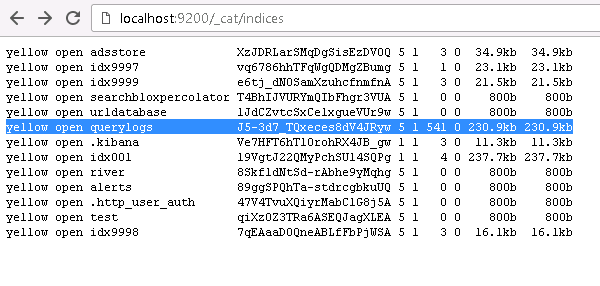
User query data is stored in elasticsearch with the index name querylogs, it can be viewed by accessing https://localhost:9200/_cat/indices.
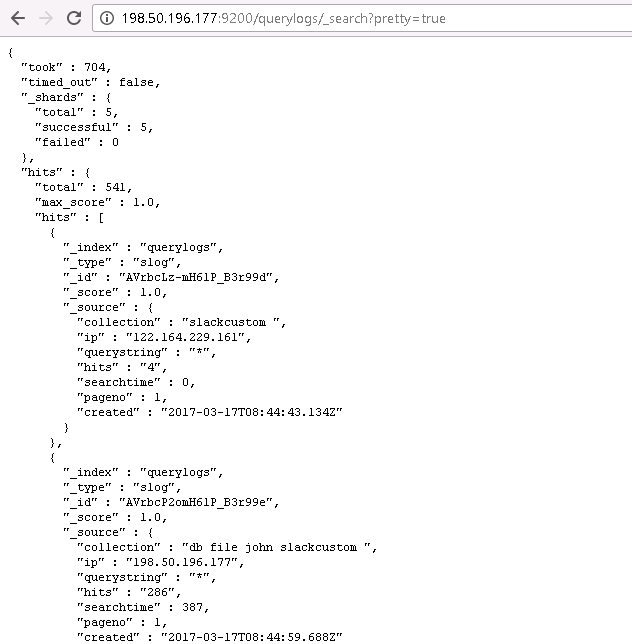
The data related to queries in the index can be accessed here https://localhost:9200/querylogs/_search?pretty=true.
Viewing Queries in Kibana
- You can use Kibana to view and search the queries stored in the querylogs index in OpenSearch. Kibana also allows you to create reports based on these queries.
- In Kibana settings, you must add the index name querylogs to access this data.
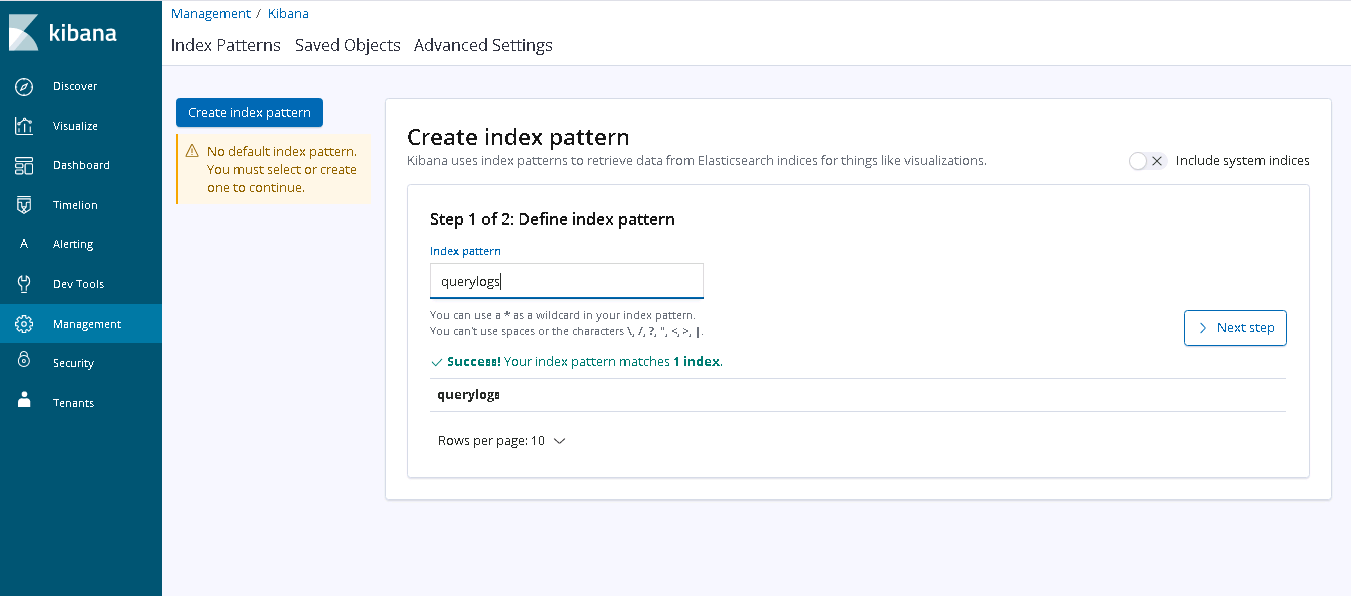
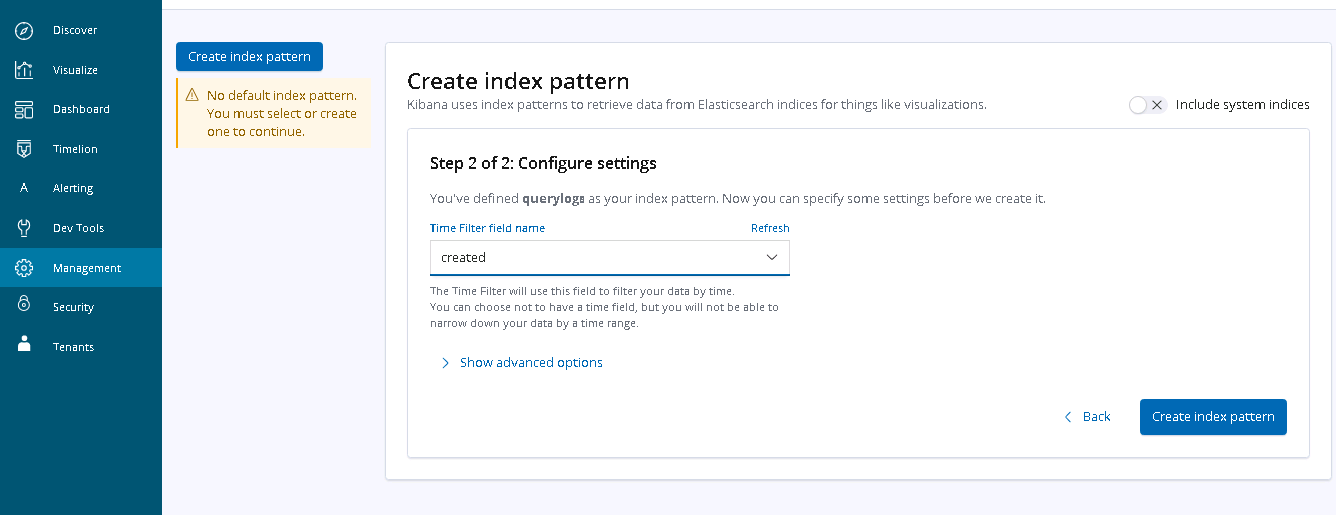
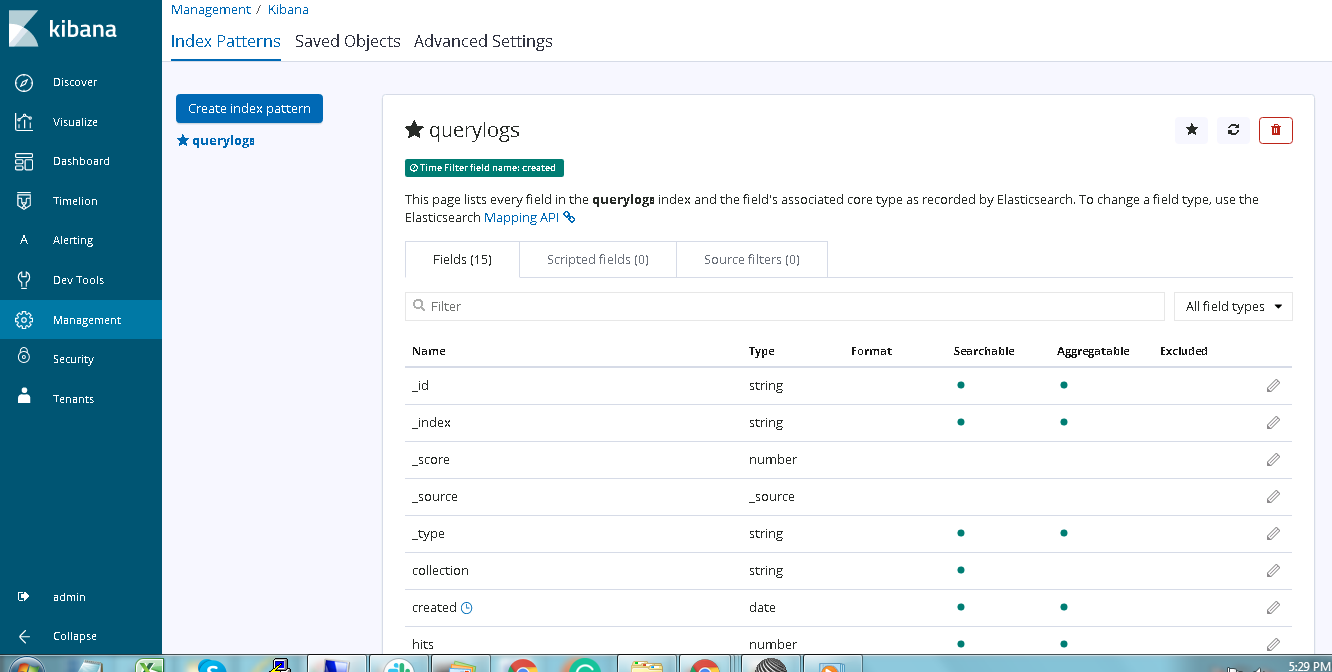
You can search and generate reports after adding the querylogs index in Kibana.
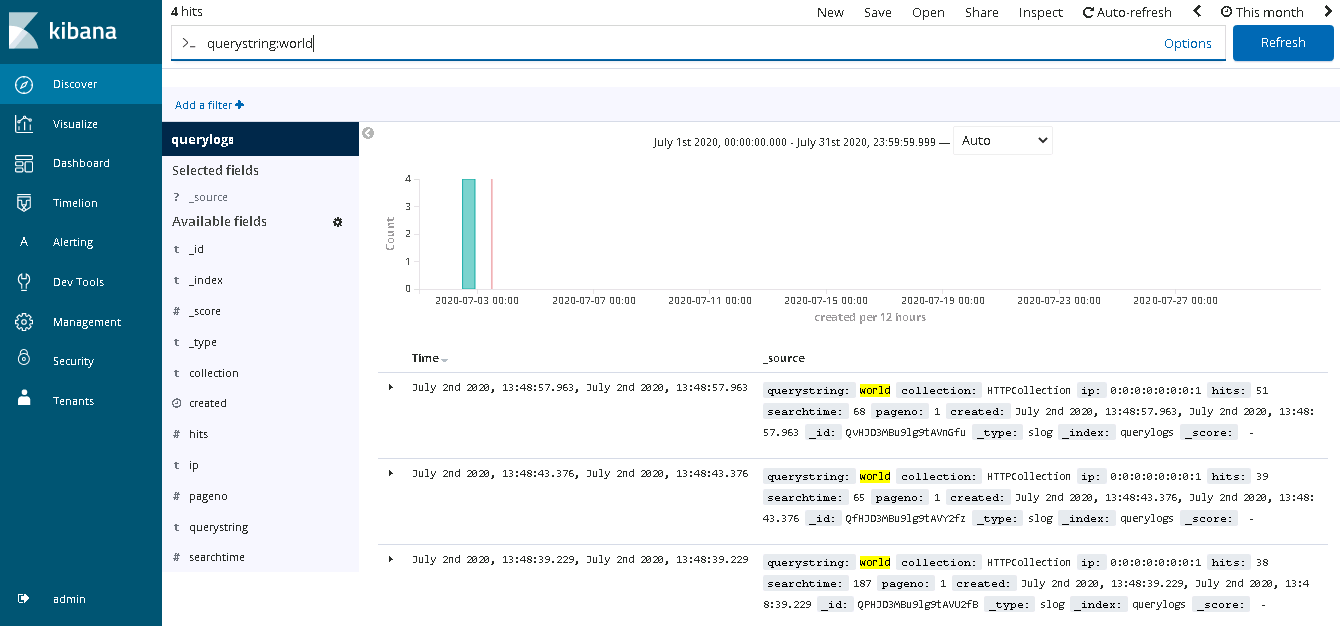
To get to know more about Kibana in SearchBlox please check the link:
Kibana Visualizations
Deleting or clearing data from querylog index
Data stored in the querylogs index, which contains search queries saved in OpenSearch, can be deleted from Kibana by sending a delete request through Dev Tools.
- Open Kibana and go to Dev Tools.
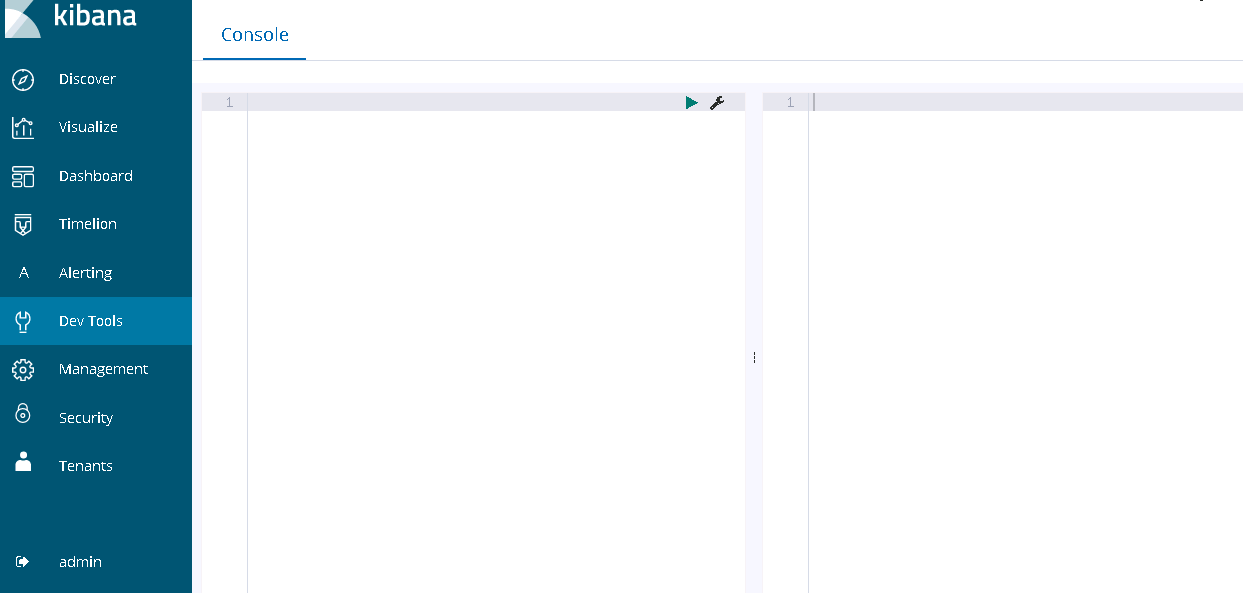
- Use the following POST request to delete all data from the querylogs index:
POST querylogs/_delete_by_query
{
  "query": {
    "match_all": {}
  }
}- If you want to delete data based on a specific date range, send a POST request that includes the date range, as shown in the example.
POST querylogs/_delete_by_query
{
 "query": {
 "range" : {
 "created" : {
 "gte" : "2020-01-01T00:00:00",
 "lt" : "2020-06-12T00:00:00"
 }
 }
 }
}
The response would be:
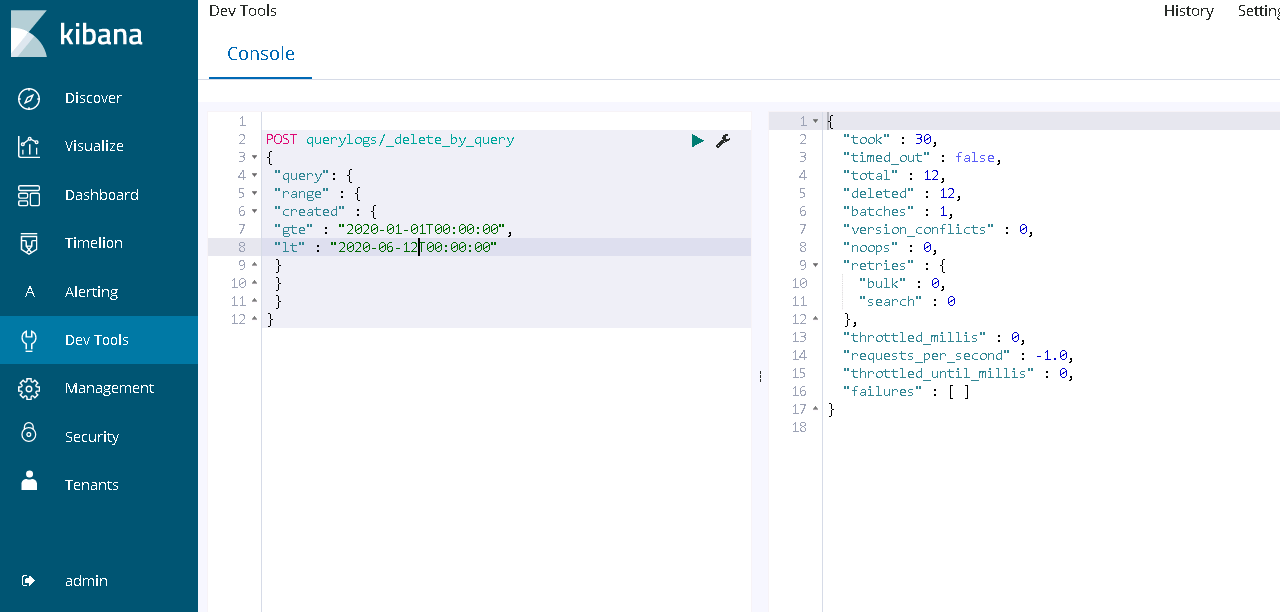
Viewing Queries From Logs
The following log files contain the entry data for searches made in SearchBlox by all users:
query.log: Contains every search query entered by users.
data.log: Contains the indexed data recorded based on user searches.
These log files are available here: <SEARCHBLOX_INSTALLATION_PATH>/webapps/searchblox/logs
Important Information:Query logs are deleted that is, log rotation is done once every 14 days.
Query Suggestion Service
For customizing query suggestions, you can make a CSV file that contains a list of queries you want to support for suggestions. Add a column heading called querystring in your CSV file.Index this custom CSV file using a CSV collection, and set the UniqueID field to querystring.
Use the AutoSuggest API endpoint to test suggestions for your collection by sending the cname parameter with your collection name.
https://localhost:8443/rest/v2/api/autocomplete?limit=5&query=lat&cname=<CSV_collection_name_here>
Reference: https://developer.searchblox.com/docs/autosuggest
Updated 22 days ago