
Cluster
Learn how to configure a single-node or multi-node SearchBlox cluster using the Admin console.
The Cluster tab lets you configure how many servers SearchBlox runs on. A single-node setup runs everything on one server, while a multi-node setup spreads the workload across multiple servers for better performance and reliability.
Use the comparison below to decide which setup is right for your organization:
| Feature | Single Node | Multi-Node |
|---|---|---|
| Best For | Testing and small deployments | Production and large-scale deployments |
| High Availability | No | Yes |
| Load Balancing | No | Yes |
| Setup Complexity | Minimal | Requires additional configuration |
| Additional Nodes Needed | No | Yes |
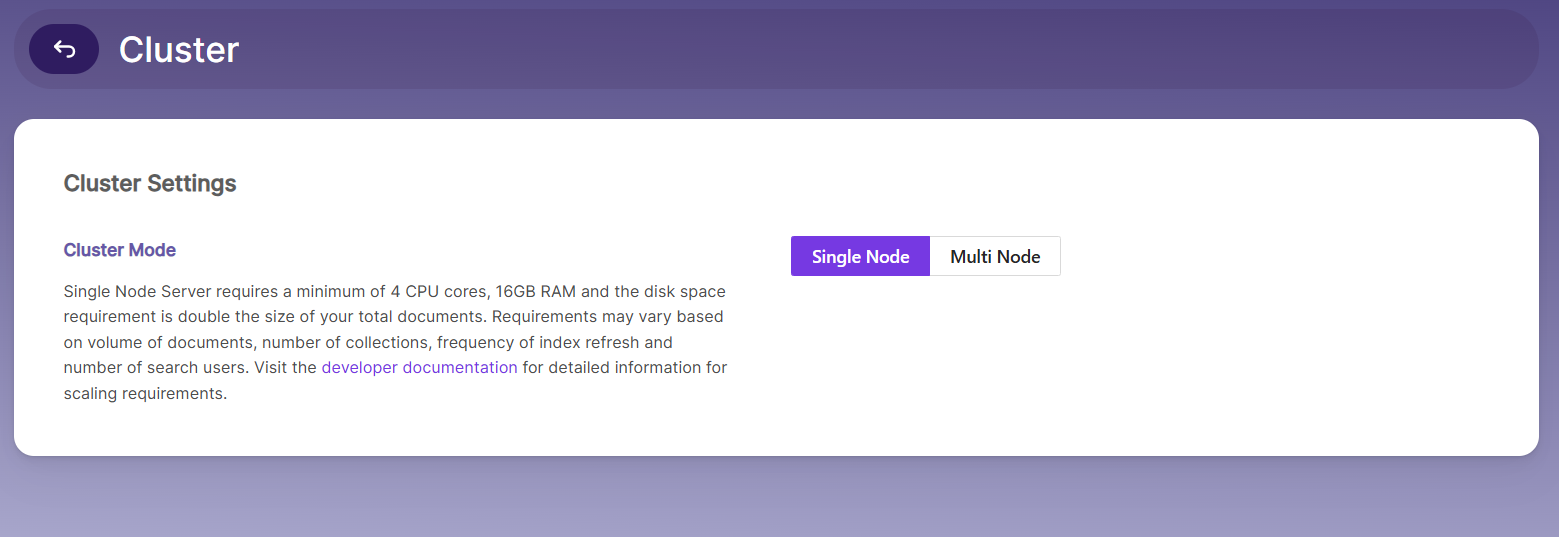
Single Node
Cluster Configuration Options
1. Single Node Setup:
Default Configuration: By default, SearchBlox runs as a single-node setup, functioning as an independent standalone instance.
Use Case: Best suited for small deployments or testing environments where high availability and scalability are not required.
Configuration:
No additional nodes are needed.
All operations—including indexing, searching, and management—are performed by a single server.
2. Multi-Node Setup:
Use Case: Ideal for large-scale deployments that require high availability, load balancing, and fault tolerance.
Configuration:
You must define the details of multiple nodes (servers) that make up the cluster. Each node collaborates to share the workload, resulting in improved performance, scalability, and system reliability.
Steps to Configure:
- Access the Cluster Tab: Log in to the SearchBlox Admin interface and navigate to Menu → Admin → Cluster.
- Select Cluster Type: Choose either Single Node or Multi-Node. Single Node requires no additional configuration, while Multi-Node requires further setup.
- Add Nodes: Enter the IP addresses or hostnames of the nodes in the cluster and ensure they are reachable and running the same SearchBlox version.
- Save and Apply Configuration: Save the cluster settings and restart all SearchBlox instances for the changes to take effect.
- Verify Cluster Status: Confirm that all nodes are properly connected and operating as expected.
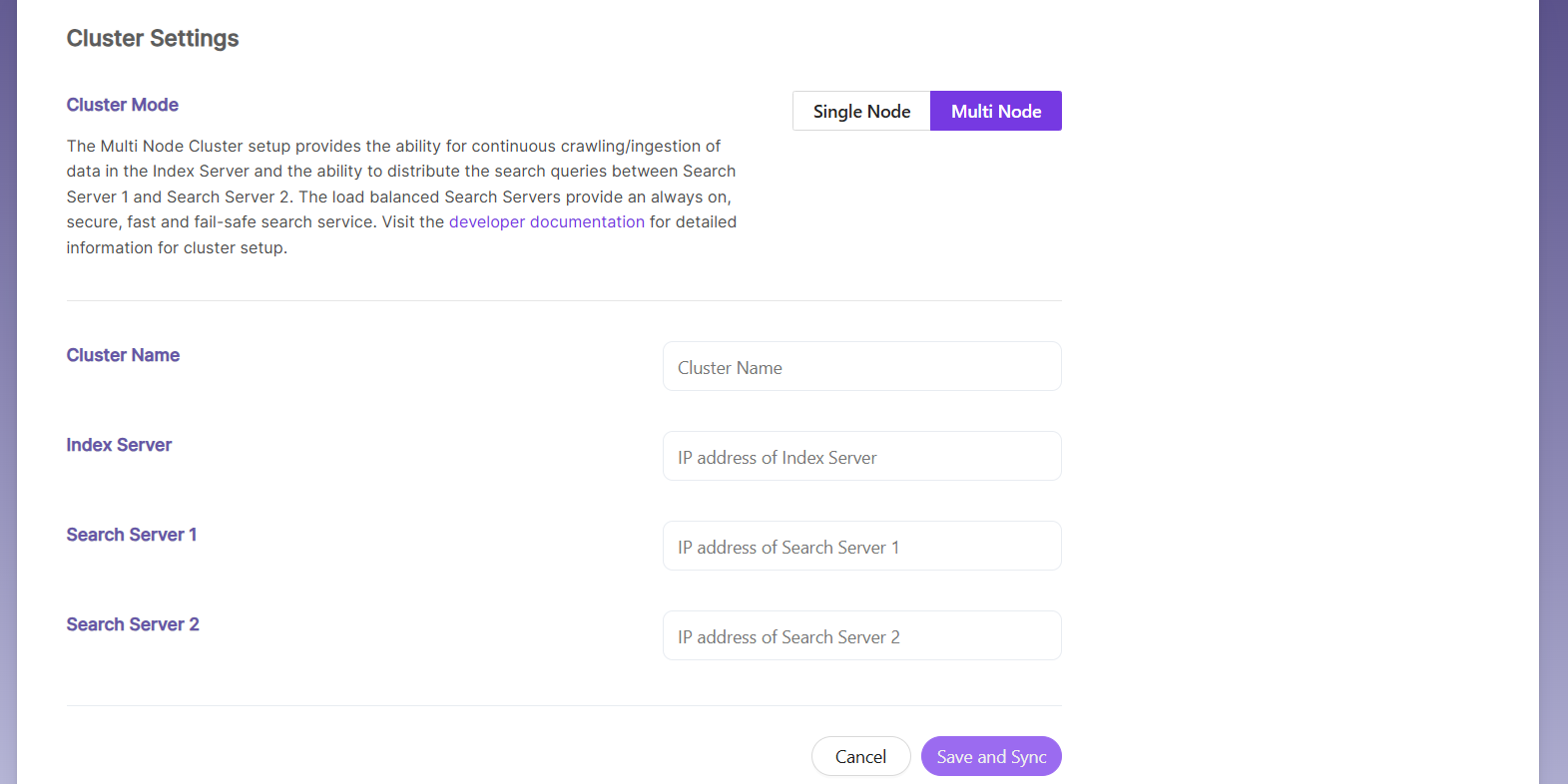
Multi Node
For detailed instructions, refer to the SearchBlox Cluster Setup documentation. If you encounter any issues during configuration, contact SearchBlox support for assistance.
⚠️ Do Not Switch from Multi-Node to Single Node
Switching from a Multi-Node cluster back to a Single Node setup is not recommended and can cause serious issues, including complete loss of search functionality.
Why Switching to a Single Node Is Not Recommended
-
Data Distribution – In a multi-node environment, data is distributed across multiple nodes. Switching to a single node can result in data loss or corruption if the data is not properly consolidated.
-
Search Functionality – Search operations depend on a distributed index across the cluster. Removing nodes without proper reconfiguration can cause search requests to fail.
-
Configuration Complexity – Multi-node deployments include settings for replication, synchronization, and load balancing. Reverting to a single node requires careful reconfiguration to avoid system failures.
-
Performance Impact – A single node may not be able to handle the workload previously distributed across multiple nodes, potentially leading to reduced performance, instability, or downtime.
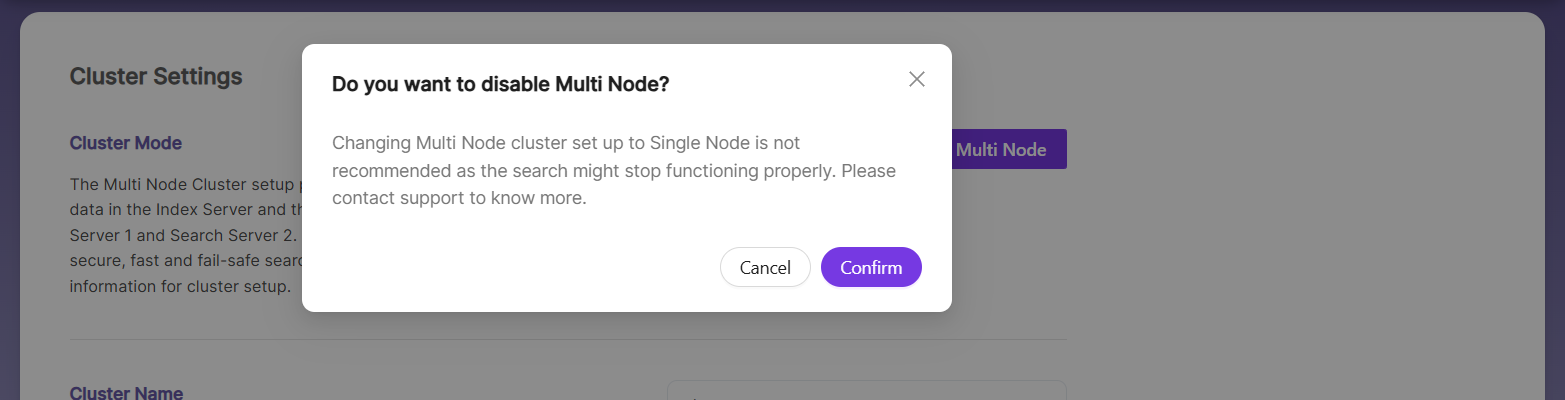
What to Do Instead
If you need to modify your cluster configuration or troubleshoot issues in a multi-node setup, follow these steps:
Contact SearchBlox Support: Reach out to the SearchBlox support team for guidance, providing details about your requirements and any issues so they can offer accurate assistance.
Backup Your Data: Create a full backup of your data and configurations before making changes to ensure the system can be restored if needed.
Evaluate Your Needs: If you are considering switching to a single node due to reduced workload or other reasons, discuss the feasibility and risks with the support team.
Reconfigure Gradually: If switching to a single node is necessary, work with the support team to reconfigure the system gradually to minimize potential issues.
Important Information:SearchBlox License: A valid SearchBlox license must be applied to all servers in the cluster.
Updated 17 days ago